
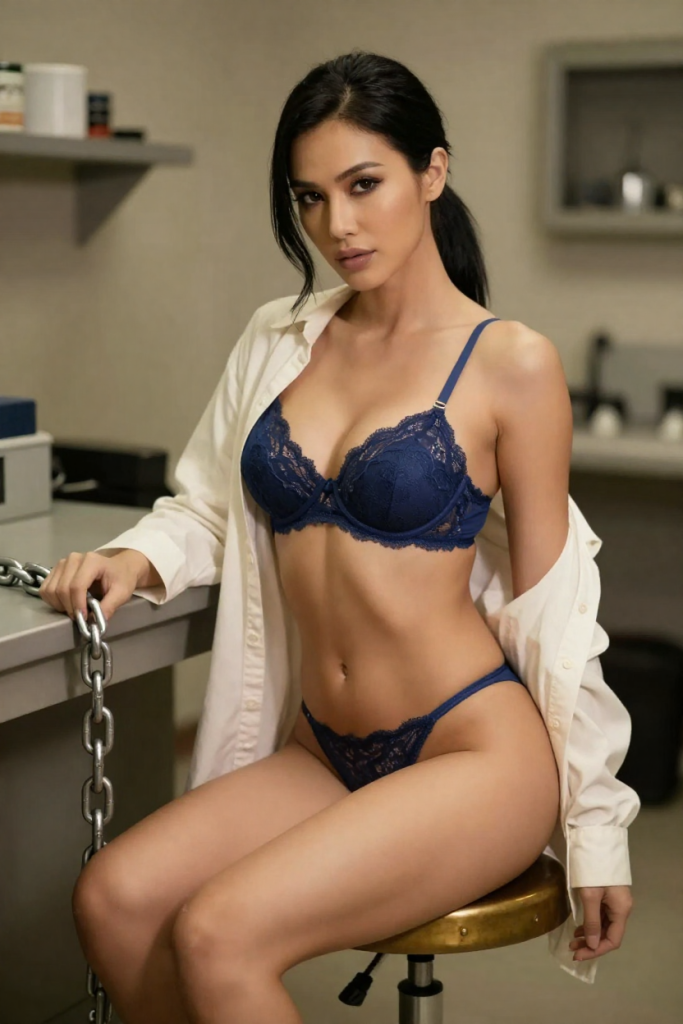
The difference between a clip that glows and a clip that melts is rarely the model. It is the direction. Amateur briefs describe a scene; professional briefs direct a movement — and they direct exactly one.
Choose animatable stills
Motion is an amplifier. A still with a clear subject, a readable pose and a background simpler than the subject amplifies into cinema. A busy still amplifies into soup. Before any video job, check the source at full size: hands, hairline, jewellery edges. Whatever is uncertain in the still will be wrong in motion, at thirty frames a second.
One verb, one manner, one camera note
The working brief shape is: she turns (verb) her head slowly (manner) toward camera, camera still (camera). Three instructions, each in its own lane. The classic failure is the verb stack — “she turns, smiles, steps forward and waves” — four jobs handed to a system that will do half of each and convince you of none. If the idea needs two movements, it is two clips; cut them together like an editor, because that is what you are.
Test short, extend what holds
Price follows duration, so the cheap test is the honest one: run the shortest length, watch the face through the fastest moment and the background at the edges, and only then buy length. When a clip tears, the fix is almost never a longer render — it is a smaller verb or a simpler still. Direction is cheaper than compute, every single time.