
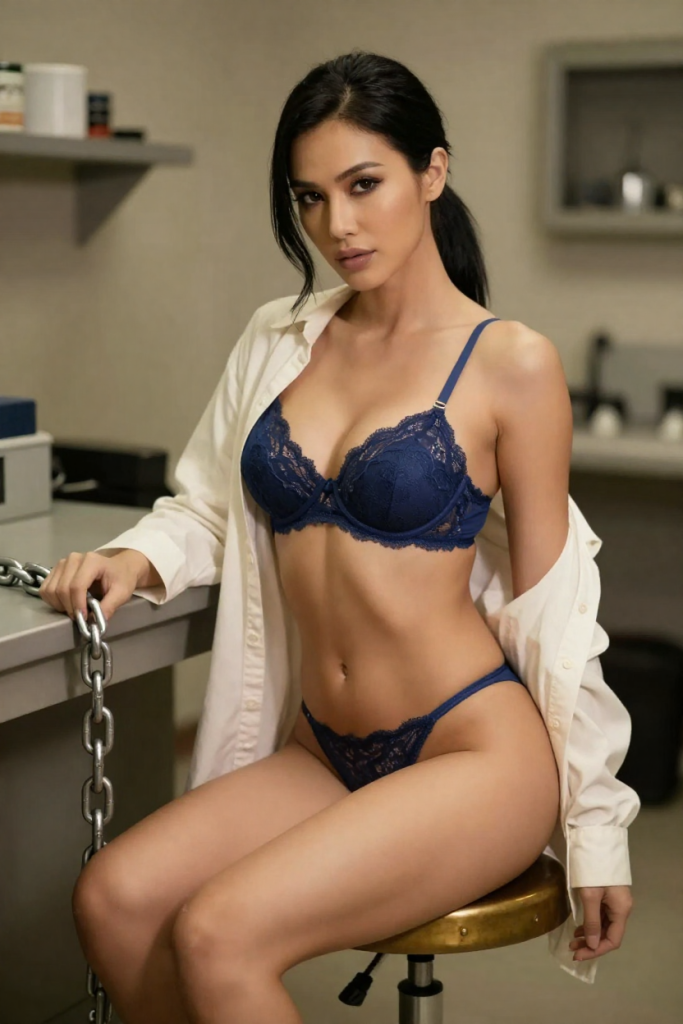
Most prompts die at the second frame. The first render is luck; the second is a revision, and revision is where a loose prompt falls apart — you change the dress and the face changes with it, because nothing in the text told the model which parts were load-bearing. A prompt with anatomy survives: five parts, each doing one job, each replaceable without disturbing the rest.
The five parts
Subject line. One adult woman, her age stated in words — “a 28-year-old fictional woman”. It feels redundant until the day a face drifts young without it; the age clause is the cheapest stability there is. Identity block. Hair, two facial anchors, build. Write it once, save it, paste it verbatim forever. This is the part you are never allowed to improvise. Wardrobe clause. One outfit, fabric and colour, one sentence. Stage directions. The room as nouns — what she stands on, what is behind her, at most one hero prop. Lighting clause. A source and a direction. Not “beautiful light”: “warm lamp light from the left” is a decision; “beautiful light” is a hope.
Revision discipline
Change exactly one part per render, and write down which. Three frames in, the note “frame 3: wardrobe only” is worth more than the frames, because it tells you what your muse responds to. The creators with consistent series are not better guessers; they are better record-keepers with stricter prompts.
What to leave out
Quality adjectives (“masterpiece, stunning, 8k”) add no information the model can use and dilute the clauses that matter. Negative lists earn their place only when a scene invites a specific accident — extra people in public-feeling rooms, text on props that should be blank. Short, concrete, load-bearing: that is the whole aesthetic.